• About

Duke City Roots

  • John Thomas Browne

    March 14th, 2024

    John Thomas Browne was born on March 23, 1845 in Ballylanders, County Limerick, Ireland and died on August 19, 1941 in Houston Texas, at the age of 96.

    He was the son of Michael and Winifred (Winnie) Hennessy Browne, and in 1852, when the third consecutive potato crop failed, they sold all their belongings and bought passage to New Orleans with their six children. The baby of the family, Michael Jr., died on the ship and was buried at sea. John was six years old when they came to America.

    They intended to then go to Winifred’s uncle’s house (Dr. Patrick Hayes – a herbal medicine doctor and farmer in Madison County, Texas), but Michael (Winifred’s husband), had fallen ill on board the ship and died after a few weeks in New Orleans. Winnie had no choice but to put her children in an orphanage and look for work.

    Soon, though, her uncle arrived and took the family on a boat to Galveston and then up the Trinity River to Cairo. The children were continually sick with a recurring fever and Winifred worried they were far from a Catholic church, and that they were in danger of losing their Catholic faith, so when her brother came to visit, they loaded up in his wagon and moved to Houston.

    Young John Thomas earned his first money as a bearer in a brickyard at $4 a month. He brought all his wages to his mother, and then soon got a regular job as a driver of a baggage wagon, which led to a job as messenger with the Houston and Texas Central Railroad.

    At the age of sixteen, he enlisted in the Confederate Army (Company B, 2nd Texas Infantry), and because of his youth was assigned to work as a locomotive fireman on the railroad going to San Antonio.

    On September 10, 1871, he and Mary Jane Bergin (Mollie) were married in the Annunciation Church in Houston – the first couple to be married there. In the Houston Chronicle (3/17/1940) he was described as “sharp-witted, honest and industrious” and found work in the grocery business as a bookkeeper and clerk , and then went into partnership with Charles Bollfrass to open a wholesale and retail grocery store on the corner of Milam and Preston in Houston. They started with $500 in capital in 1872, and by the early 1890’s were earning $340,000 annually.
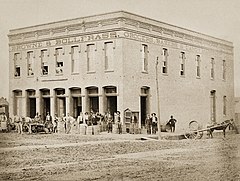
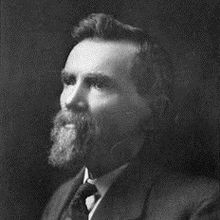
    John Thomas Browne

    He and Mary Jane had twelve children, one of them being Thomas J. Browne, a city assessor and tax collector who the newspaper described as one of the best-loved figures in Houston history.

    John served as an alderman in Houston for two terms, then became mayor in 1892. He served two terms as mayor and was known as “Honest John Browne” and also as the “Fighting Irishman”. According to Wikipedia, he was instrumental in forming the Houston Fire Department as a paid force. He later served two terms in the Texas legislature.

    The Houston Chronicle interviewed him the year before he died, and mentions the “merry twinkling of his eyes and the laugh creases about his lips as he talks about old Houston. He wears the short, neatly clipped beard and moustache, both brown but lightly touched with white, like his hair which shows but few signs of thinning. If you weren’t told you would hardly believe his age could be more than 72 … his hearing is not as good as it used to be and he likes to hear every word you say, especially if you’re talking about Old Houston, his Houston.”

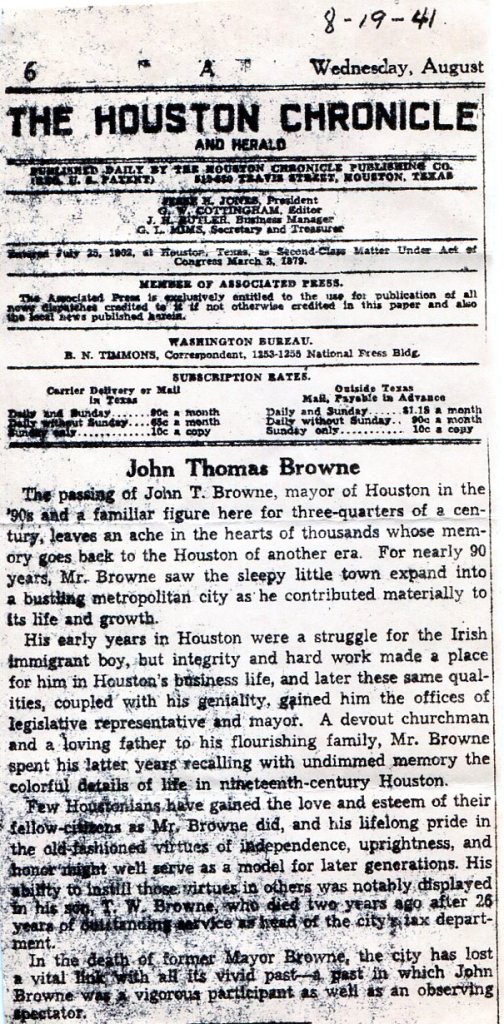
    John Thomas Browne and Mary Jane Bergin Browne

    Great great grandparents

    Third great grandparents

    Fourth great grandparents
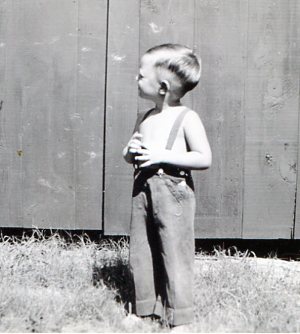
  • Joseph Edward Browne, Jr.

    March 7th, 2024

    Joe (August 18, 1931- May 3, 2012) was the son of Joe and Reba Browne. He was born in Houston, Texas, but moved with his family to Albuquerque, NM at a young age and grew up there. He had a sister, Mary, born in 1943. He never got over his love for the Texas coast though, and eventually moved back there.

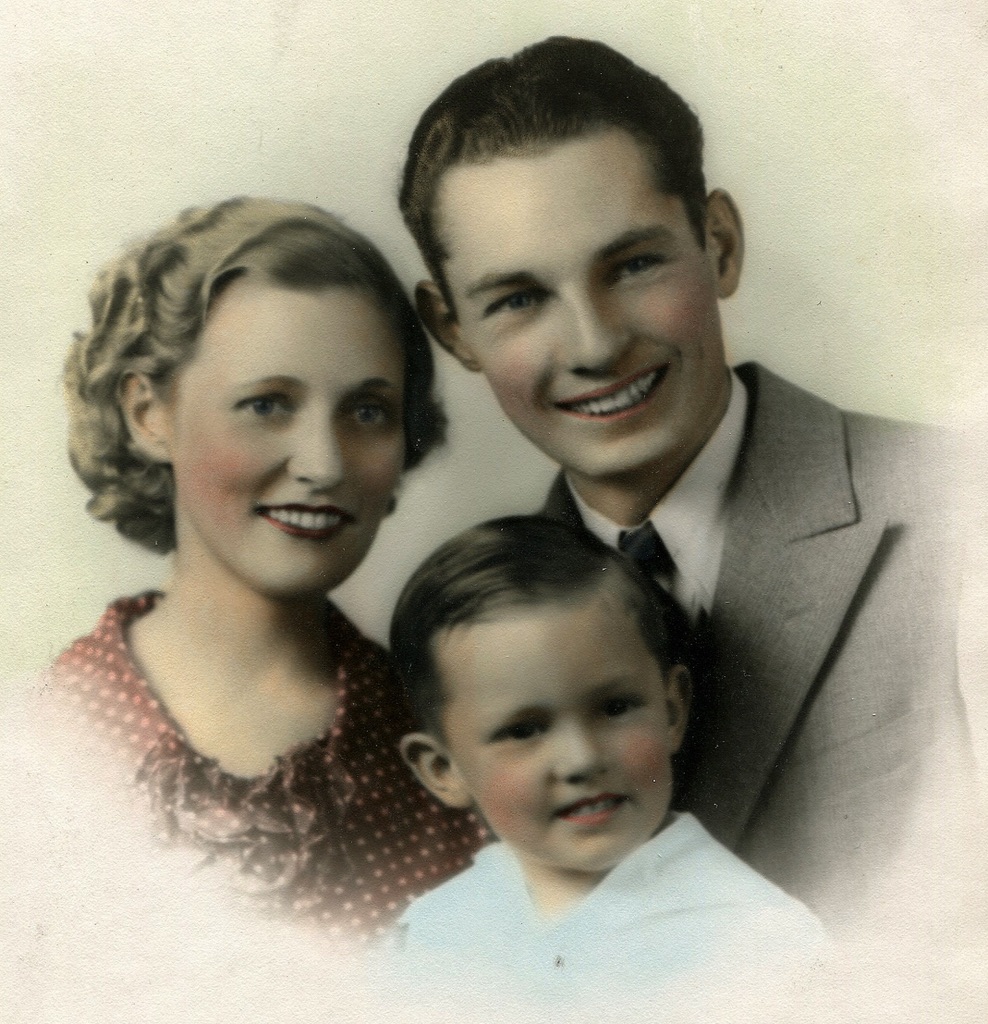
    Joe around 1935

    He was an athletic boy – liked baseball and was a lifeguard as a teenager. He rode his bicycle all over town – Tingley Beach, the West Mesa, and the Sandias were a few places he liked to bike to. He attended Albuquerque High School and worked at the Kimo movie theater, where he met Joan Roper and they married in 1948 and had their first child Colleen in 1949. Cathleen (Suky) followed in 1950, then Joe III (Buddy) in 1952 , and Steve in 1954. He and Joan divorced around 1960.

    Steve, Suky, Buddy, Joan, Joe at 6700 Mossman Dr.

    Two things he loved were airplanes and the ocean. He started a charter business, Thunderbird Air, based at the Albuquerque airport and flew people to different locations – sometimes to Central and South America which he loved. He once had a job flying Senator Dennis Chavez around the country. When he lost his eyesight in one eye due to optic nerve damage it was a blow to him to have to stop flying. He would sometimes take his kids to sit on the wall at the Albuquerque airport and watch the planes take off overhead.

    Albuquerque airport

    He later moved to Rockport, Texas and built a dome house right on the water. At that time he was married to his second wife, Pat. They had one child, John Thomas born in 1970, and she had three children from a previous marriage, Walter, Elaine and William.

    He was a gifted story teller – the words would just flow and whether he was relating tales from his childhood or flying days or talking about politics, he would have everyone’s attention with his often hilarious stories – he often would hone in on life’s absurdities. He could be sarcastic at times, but he was actually a softhearted, sensitive person with a natural affinity to those without many chances in the world.

    Joe and Nick, 1976

    Father

    Grandfather

    Great grandfather

  • Joseph Edward and Reba Browne

    February 29th, 2024

    Joseph Edward Browne (September 2, 1913-January 6, 2000) and Reba Maureen Newland Browne (June 26 1913-July 5, 2005) were both born in Texas – Joe in Houston and Reba in Groveton in Trinity County.

    They married in Houston in 1930 and had two children, Joseph Edward Jr. (1931-2012), and Mary Ann (1943-)

    Joe was the son of Joseph Edward Browne and Irene Rickert. His father died of appendicitis at the age of forty when young Joe was nearly two, and his mother remarried William McShan (who was in the grocery business) in 1920. His siblings were Emma, John T., Catherine, Irene, and Mickey (half-sister).

    Joe entered into the pharmacy profession and started the Joe E. Browne Pharmacy in Albuquerque. He worked as a pharmacist his whole life – over 60 years. He enjoyed gardening and working in the yard as well.

    Joe Browne, Mr. Miller, unknown, Don Roberson at Joe E. Browne Pharmacy in the 1950s.

    Reba’s parents were Frank Newland (1892-1922) and Mary Belle Davis Newland (1896-1984). Reba’s father died on December 27, 1922, when she was only nine. His lumber truck went off the road, and it seems they tried to transport him to Houston on a freight train, but he was too badly injured and didn’t make it. Reba and her mother were on their own until her mother (Mary) married Herbert Bigham in 1928 when Reba was fifteen. Some of Reba’s memories of her childhood included everyone running for cover when an airplane would fly overhead for fear that it might be the “Kaiser.” (Kaiser Wilhelm of Germany). Also she remembered her family and the town being hit hard by the Spanish Flu.

    Reba and Joe moved to Albuquerque in the 1930s and lived there for the rest of their lives, first at 610 Richmond, and later at 3104 Lykes.

    Mary and Reba about 1948

    They had nine grandchildren (Mary’s children – Melanie, Lisa, Michelle, Reba and John; and Joe’s children – Colleen, Suky, Buddy and Steve).

    Reba was a gracious, kind person. When Joe’s older sister Emmy developed the disease ALS, Reba was the one who took care of her. She always dressed very fashionably, and had lots of high heels that her granddaughters liked to try on. They belonged to St. Charles Catholic Church and she was active in the women’s auxiliaries – always worked at the State Fair booth for example.

    Reba and Joe about 1931

    Granny Bigham (Mary), Colleen, Granny (Reba)

    Colleen, Nick, Reba, Mary, Amy, Suky

    Joe and Reba

    grandparents

    great grandparents

    2nd great grandparents

  • John and Samuel Lucas : A Civil War story

    February 22nd, 2024

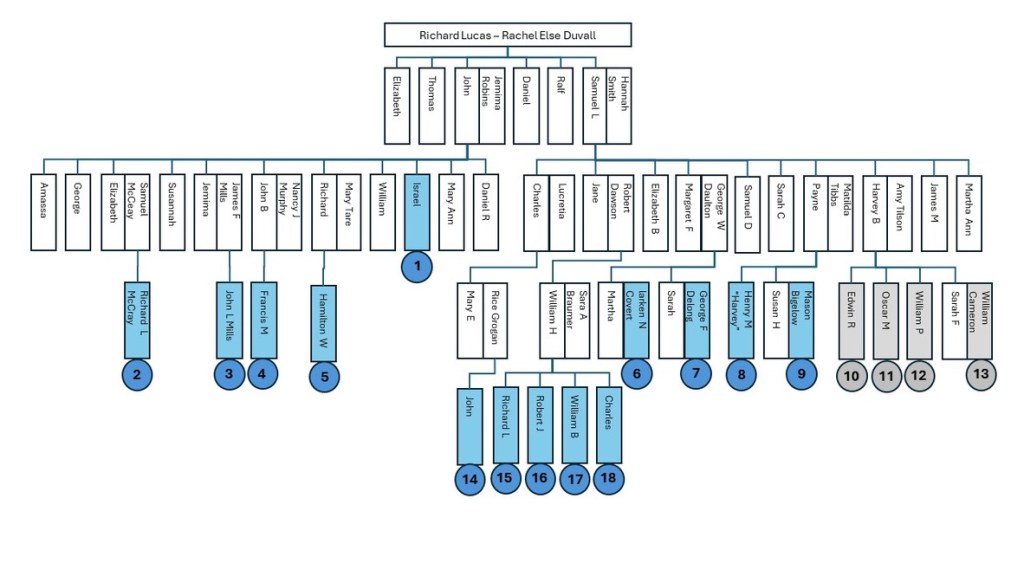
    Richard Lucas (1732-1791) and Rachel Else Duval Lucas (1736-1785) were born in Maryland and were the parents of six children. Richard was a sergeant in the Revolutionary war.

    Two of their sons John (1760-1836) and Samuel (1764-1833) were each the parents of ten children. Samuel was a saddlemaker and John was a soldier in the Revolutionary War like his father. Minnie Lucas Lee wrote a letter about John – here is an excerpt:

    “he was a lad of sixteen when the war was declared and served six years, He was taken prisoner by the Indians and taken to Kentucky and Ohio…”

    The rest of the letter can be find in John Lucas’ entry.

    Of the twenty children beween the Samuel and John (10 boys and 10 girls), there was one soldier in the Civil War, on the Union side.

    Of the 159 grandchildren of Samuel and John (74 for Samuel and 75 for John), there were twelve soldiers in the Civil War, eight on the Union side and four on the Confederate side.

    Of the great-grandchildren of Samuel and John, there were five soldiers in the Civil War, all on the Union side.

    Amazingly, that is eighteen soldiers, fourteen on the Union side and four on the Confederate side from these two brothers. (Four married Lucas daughters)

    The chart below shows the relationships, starting at the top with Richard and Rachel Lucas. The blue rectangles are Union soldiers and the gray rectangles are Confederate soldiers.

    Following is a brief description of these soldiers.

    1. Israel Lucas, August 12, 1804-May 5,1862. Born in Butler County, Ohio and enlisted as a private in Company G of the 71st Ohio Volunteer Infantry in 1861 at 57 years of age. He died of disease at Fort Donelson, Tennessee and was buried there.
    2. Richard Lucas McCray, July 7, 1828-May 17, 1863. Born in Indiana. Lieutenant in Company G, 23rd Iowa Infantry. Killed by sharpshooters at the Battle of Big Black River Bridge, where the Union troops commanded by Brig. Gen Vaughn defeated the Confederate troops and the remaining Confederate troops retreated to Vicksburg and the next day the siege of Vicksburg began.
    3. John Lucas Mills, June 29, 1823-March 26, 1884. Born in Butler County, Ohio. He enlisted on August 13, 1862 and was a sergeant in Company C, 86th Regiment, Indiana Infantry. He mustered out on December 15, 1862.
    4. Francis Marion Lucas, January 9, 1842-January 13, 1906. Born in Butler County, Ohio. Was a seaman in the Navy on the USS Ouachita, (a steamer captured from the Confederacy that patrolled the Mississippi River and its tributaries); as well as in the army possibly. Was discharged on December 30, 1864.
    5. Hamilton W. Lucas, October 27, 1840-September 19, 1864. Born in Darke County, Ohio. He enlisted in Company AB, 110th Regiment, Ohio Infantry. His occupation was listed as a cooper. He was killed in action at Winchester, Virginia.
    6. Larkin Nelson Covert, married to Martha Daulton. He enlisted in Company G, 70th Regiment of the Ohio Volunteer Infantry (O.V.I.) He participated in the many battles in which that regiment was engaged, from Shiloh till his honorable discharge at Fort McAlister, December 31, 1864.
    7. George F. DeLong, 1831-May 21, 1864. He was born in Montpelier, Vermont and was married to Sarah Daulton. Enlisted in Company B of the 34th Regiment of the Ohio Volunteer Infantry (O.V.I.). Here is an excerpt of a letter he wrote to his wife on August 5, 1863 “My Dear, I got your letter of the 18th, yesterday, it had been sent to Fayetteville and layed there till Capt. Boyd came back. Matthew Mahoney brought it, and one from friend Thomas of the same date. These are all the letters I have received since the 27th of July. I hope, love, to hear from you soon as the Raid is now at an end. God grant that the war may end as speedily as did Morgan’s Raid, as I am very anxious to be at home with those I have so ruthlessly deserted, but thank God I am in a good cause and through the providence of God, I have thus far been spared with life and health. Oh, may his arm protect me to the end of this wicked rebellion. Give my love to my children. Tell Medora she must try to improve in writing as I could hardly read her last letter, but was, nevertheless, glad to know she had not forgotten me. It will bother you to read this letter, as in turning the paper I commenced on the wrong page. I hope, love, we may meet soon as I long to see you and embrace that loved form. Live in hope, love, and persevere till the end, which must soon come. God bless you all, my ever dear ones. He was wounded May 9, 1864 at the Battle of Cloyd’s Mountain. Here is a description of the battle -There was an open field of about half or two-thirds of a mile in width and across this the Federal force had to advance, the Confederates in the meantime pouring a most galling fire upon the approaching lines.  At the foot of the slope upon which the enemy was posted was a muddy stream waist deep, through which the charging troops waded, and after taking breath ascended the ridge, wavering in spots under the heavy fire, but on the whole keeping in good order. When close to the enemy’s breastworks the whole Federal line rushed forward with a yell and the impetuosity of the attack completely routed the Confederates behind the abatis. He was taken to Dublin Depot as a prisoner and died on May 11, 1864 from a gunshot wound through the bowel.  He left four children and his wife Sarah who was expecting their fifth child. Sarah applied for a widow’s pension for herself and the minor children.  She was awarded eight dollars a month for herself and two dollars for each of the children, until they reached age 16.
    8. Henry M. “Harvey” Lucas , 1828-1876. He was born in Bracken, Kentucky, and enlisted in Company B, 40th Regiment, Kentucky Mounted Infantry.
    9. Mason Wheeler Bigelow, December 29, 1840-December 4, 1924. Born in Kentucky, married to Susan Lucas. Enlisted on August 10, 1862 in Company E, 10th Kentucky Calvary.
    10. Edwin Ruthvin Lucas Company K 11th Alabama Volunteer Infantry, Confederate Army. He became a captain and operated in Virginia under General Lee and was in 24 general engagements but was never wounded or captured. After the war he was a farmer, and also a state legislator.
    11. Oscar Madison Lucas, October 31, 1838 – December 10, 1920. He joined Cahaba Rifles, Cahaba, Alabama, in April 1861. Rendezvoused at Montgomery, Alabama and the company became Company G, 5th Alabama. He wrote that “a spent minnie bullet struck him high on his forehead, burrowed just beneath the skin of his skull, and stayed in this path until it emerged at the rear of his cranium, leaving two holes and a lot of scar tissue, which looked a lot worse than they were.” The old minister was fond of contending, when he had something to be sorry about or apologize for, that the hole in his head was to blame. He eventually was designated as a chaplain of the 11th Alabama regiment, and after the war became a Baptist minister.
    12. William P. Lucas, 1841-April 14, 1862. Born in Alabama, enlisted as a private in Company F, 5th Alabama Infantry, April 5, 1861. He was wounded in the Seven Days Battles in which General Lee kept the Union forces from taking Richmond, and died from the wounds in the hospital in Richmond, Virginia April 14, 1862.
    13. William Pendleton Cameron, 1831-November 13, 1898. He was born in West Point, Georgia, and married Sarah Lucas. He enlisted in the Fulton regiment of the Georgia Infantry.
    14. John H. Grogan, September 21, 1842-November 18, 1864. Born in Tennessee, he was a corporal in Company G, 7th Regiment, Tennessee Calvary. John H. Grogan and brother, Granville H. Grogan, were murdered by “bushwhackers” during the American Civil War in the vicinity of New Liberty Baptist Church, 7th District, Carroll County, Tennessee. “Murdered” is verified on grave markers of both soldiers at New Liberty Baptist Church.  Military records provide information that John H. Grogan made Corporal in Company G, 7th Tennessee Cavalry (US).  Military records have not been found on Granville Grogan even though his photograph  was made in a U.S. Cavalry uniform. The family story is that the “bushwhackers” made the family watch the execution. I didn’t include his brother, Granville Grogan, because there are seemingly no military records for him, but he appears in a picture in a Union uniform so it’s unclear if he was in the military.
    15. Richard Larman Dawson, November 4, 1832-November 26, 1916. Born in Maysville, Kentucky, he was a blacksmith by trade. He was in Company H of the 1st Regiment of U.S. Veteran Engineers.
    16. Robert J. Dawson May 2, 1836-July 18, 1903. Born in Maysville, Kentucky. Enlisted as a musician in Company H, 133rd Ohio Infantry. Mustered out on August 6, 1864.
    17. William Blanchard Dawson, February 12, 1840-September 22, 1924. Born in Kentucky, he enlisted in Company C of the 16th Kentucky Infantry. After the war he was a blacksmith and then police chief and constable in Maysville. He was blind for the last 13 years of his life, and apparently watching baseball had been one of his favorite pasttimes until then, and was a Cincinnati Reds fan.
    18. Charles L. Dawson, November 1846-September 2, 1916. Born in Kentucky, he enlisted in Company D, 10th Kentucky Cavalry.

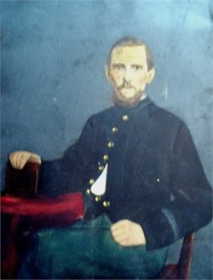
    Here are a few pictures of these soldiers.

    George F. DeLong

    Larkin Nelson Covert

    Oscar Madison Lucas

    John Grogan

    Richard Larman Dawson

    Richard and Rachel Lucas: 5th, 6th, 7th great grandparents

    John and Jemima Lucas: 4th, 5th, 6th great grandparents
    Samuel and Hannah Lucas: 5th, 6th, 7th great aunt and uncle

    Israel Lucas: 4th, 5th, 6th great uncle

    The other soldiers listed are 2nd, 3rd and 4th cousins 3 and 4 times removed.

  • Captain Benjamin P. Roper

    February 15th, 2024

    Benjamin P. Roper (1832-1869), the grandfather of Clyde Roper, was born in Pickens, South Carolina to Joel and Julia Ann Roper. He married Esther Ann Roberston in 1851 and they had eleven children.

    Benjamin joined the Confederate Army on April 15, 1861 as a 2nd lieutenant in the 7th Infantry. After the South Carolina militia was reorganized he led the 9th regiment and was promoted to captain.

    7th Regiment, South Carolina Infantry

    OVERVIEW:7th Infantry Regiment was assembled at Columbia, South Carolina, during the spring of 1861 and moved to Virginia in June. After fighting in Bonham’s Brigade at First Manassas, the unit served under Generals Kershaw, Kennedy, and Conner. It participated in the campaigns of the Army of Northern Virginia from the Seven Days’ Battles to Gettysburg, then accompanied Longstreet to Georgia. The 7th was active at Chickamauga and Knoxville, returned to Virginia, and saw action at The Wilderness, Spotsylvania, and Cold Harbor. It continued the fight in the Shenandoah Valley with Early and ended the war in North Carolina. This regiment totalled 581 officers and men in April, 1862 and sustained 82 casualties at Savage Station and 40 at Malvern Hill. During the Maryland Campaign, there were 13 killed and 100 wounded of 466 at Maryland Heights and 23 killed and 117 wounded of the 268 at Sharpsburg. It lost 4 killed, 57 wounded, and 61 missing at Fredericksburg, twenty-seven percent of the 408 engaged at Gettysburg, and 2 killed and 12 wounded at Bentonville. On March 23, 1865, there were 222 present for duty, and it surrendered in April. The field officers were Colonels D. Wyatt Aiken and Thomas G. Bacon; Lieutenant Colonels Elbert Bland, Robert A. Fair, Elijah J. Goggans, and Emmet Seibels; and Majors John S. Hard and William C. White.

    National Park Service


    The 7th South Carolina is known as “the Bloody Seventh”
    because of its bloodshed in numerous Civil War battles as part of Kershaw�s Brigade.

    ehistory.os.edu

    He was severely injured at the Battle of Fredericksburg.

    Benjamin Roper- Born about 1833. Farmer. Elected at
    re-organization on 4/13/62.
    Wounded in hip at Fredericksburg on 12/13/62.
    Wounded at Chickamauga 9/20/63.
    Collected tax collector for Edgefield
    District on 10/11/64. Resigned on 12/19/64. 

    ehistory.osu.edu

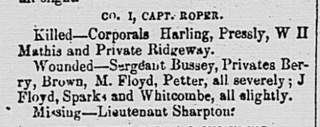
    The two clippings below detail the casualties at the Battles of Chickamauga and Gettysburg:

    He wrote a letter of condolence to the family of one of his soldiers killed at Gettysburg.

    At the end of the war, he resigned from the army and was elected tax collecter.

    In the census of 1880, he lists his occupation as farmer.

    Benjamin P. Roper

    great great grandfather

    3rd great grandfather

    4th great grandfather

  • Earl, Erna, Myrtle and Frank Roper

    February 8th, 2024

    Claude Earl, Lillian Erna, Addie Myrtle and Benjamin Frank Roper were the siblings of Clyde Roper. Their parents were Benjamin Franklin and Bettie Reeves Roper. One interesting note is that all the children seemed to go by their middle name, including Clyde (Edgar Clyde). We don’t have a lot of information on them, other than Earl.
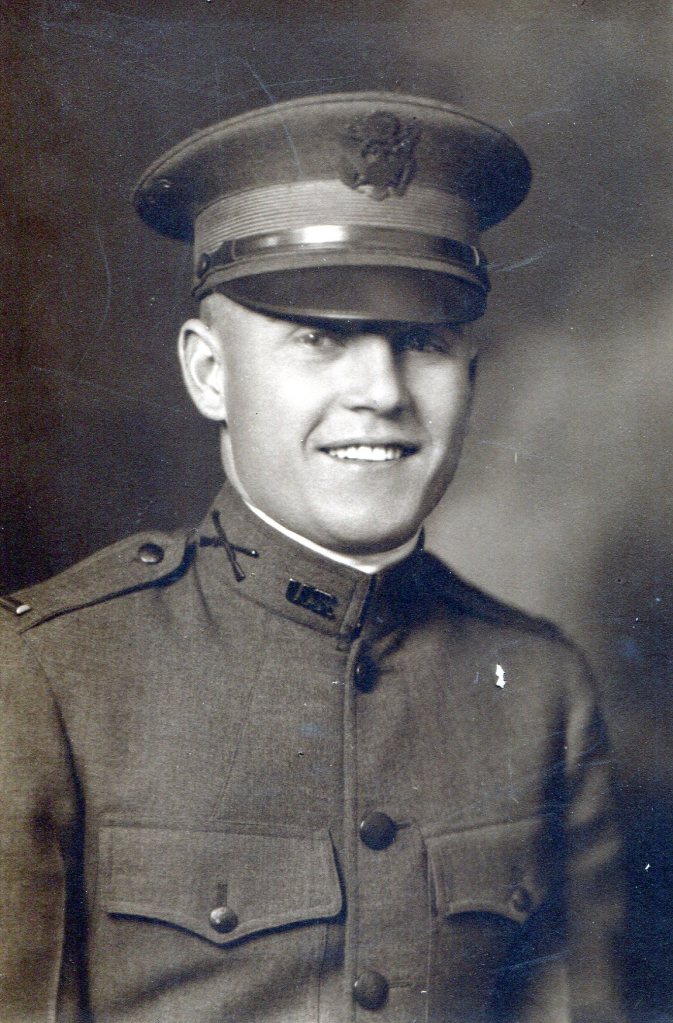
    Lillian Erna (1891-1951)

    Erna, as she was called, married Albert Draper in 1910 in Texas and had three sons, Elmond (1911-1975), Marshall (1916-1940) and Lee Earl (1918-1970). She and her family lived in Albuquerque until 1941 and then moved to California. Marshall died when he was 23, apparently of a kidney condition. He had been an engineering student at the University of New Mexico. Elmond was a civil engineer and hydrologist and worked for the Bureau of Reclamation in Arizona and maybe Montana. Lee Earl was a technical sergeant in the Air Force in WWII where he was an airplane crew chief in Northern France.

    Claude Earl (1892-1968)

    Earl and his wife Alma lived down Tillotson Street in Trinidad from Blanche and Roy Bratcher. Earl was a fireman for the C & S railroad and then an engineer. He and Alma had three children, Earl Jr. (Buddy), (1929-2002) Ruth Ann (1927-2015), and Jimmy (1939-) Ruth Ann and Buddy were playmates of Joan Roper, Clyde and Mabel’s daughter. Buddy became a professor and taught at a university in Corpus Christi, Texas, and Ruth Ann was a librarian and lived in Arizona.

    Earl was in the Army in World War I and was in France from 1918-1919.

    Here’s a harrowing story in the Greeley newspaper about a train crash that Earl narrowly escaped from in November, 1941.

    Addie Myrtle (1899-1972)

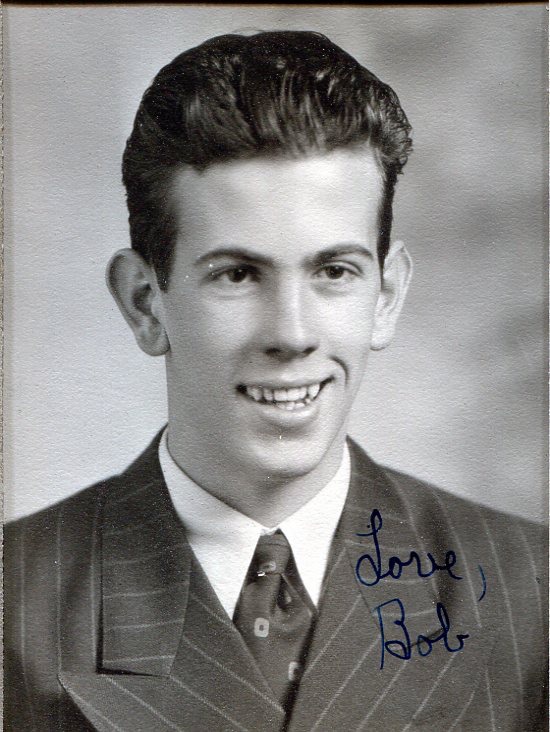
    Myrtle married Ralph Slane in 1920 and they had three children, Bettie (1922-2005), Bob (1923-2011) and Billy (1927-2010).

    Bob was the Air Force pilot from the last entry, Judy and Billy lived most of their lives in Colorado and California.

    Benjamin Franklin (1901-1982)

    Frank lived most of his life in Trinidad, Colorado, and California. He was married to Frances, but there’s not much more information about him.

    Erna, Earl, Myrtle, Frank

    Great aunts and uncles

    Great great aunts and uncles

    3rd great aunts and uncles

    Bob, Judy, Billy, Elmond, Marshall, Earl Lee, Buddy, Ruth Ann Jimmy

    First cousins once removed

    First cousins twice removed

    First cousins 3 times removed

  • Robert Murray Slane

    February 1st, 2024

    Robert (Bob) Slane (1923-2011) was born in Ludlow, Colorado (near Trinidad) to Ralph and Addie Myrtle Roper Slane. Myrtle was Clyde Roper’s sister. Bob married Mary Elizabeth (Lee) Valentine and they had two children, Judy and Thomas.

    Bob and Mary Elizabeth (Lee) Valentine Slane

    He was a pilot in the Air Force during World War II, and was shot down and imprisoned by the Germans for nearly two years. He also survived a crash in 1956.

    Obituary of Robert Slane

    Robert M. “Bob” Slane, a retired Air Force pilot and colonel who survived three crashes or shoot-downs in his military career, as well as almost two years captivity in one of the most brutal German stalags, died early Wednesday at his home in Shreveport after a lengthy illness. He was 87.
    A Colorado native, Slane served 33 years in the military, retiring at Barksdale Air Force Base, where his last assignment was as commander of the 2nd Combat Support Group from September 1972 through July 1974. He was one of the last people to hold the title “base commander,” at a time when Barksdale had separate facility and wing commanders.
    Retired LSUS journalism professor and former Communications Department head Dalton Cloud was a friend and neighbor 35 years and edited Slane’s 2006 memoir, “Journey to Freedom and Beyond.”
    “There wasn’t anything about Slane that was affected at all,” Cloud said. “He remembered his military experiences with a fondness that is unbelievable. If he could have joined the service two years ago, he would have gone back in. He truly was an individual who loved the military and loved his country.”

    Slane and his wife, Mary Lee, first were at Barksdale from 1954 to 1964, where he was a B-47 and B-52 aircraft commander.
    It was while he was at Barksdale that Slane survived one of the most horrific incidents in his career. He was aircraft commander of a B-47 on a routine training mission 30,000 feet over Canada on Nov. 30, 1956, when the airplane experienced hydraulic and system failures that put it into a deadly spin. Slane ejected, but three other crew members died in the crash.
    In his memoir, Slane noted his anguish on losing crewmates. But he also noted that as the sole survivor of at least six B-47 crashes involving spin, his testimony was able to help correct mechanical problems and prevent future similar accidents with the medium bomber.
    “Perhaps I can gain some solace in that I was able to describe the events that occurred and thus contributed to a solution that may have saved others,” he wrote.
    His son Tom Slane remembers the day his father crashed in Canada. He was 6 at the time.
    “I can remember those guys who came to the door, I can hear it just like it was yesterday, my mother saying ‘Oh no.’ It took me until later in life to realize what a wonderful person he was, the fabulous things he did.”
    Slane was a participant in costly and bloody B-17 raids over ball-bearing factories at Schweinfurt, Germany. Shot down over France with his B-17 after the Oct. 14, 1943, Schweinfurt mission, he was imprisoned at camps that included the infamous Stalag Luft III. He escaped, was recaptured, and finally as liberated by Lt. Gen. George Patton’s tankers in April 1945. He also survived an initial crash in an England beet field four days before his
    Schweinfurt shoot-down when his B-17, named “Sir Baboon McGoon,” found itself tanks-dry after a mission.
    After his military retirement, Slane worked two years as executive director of the Caddo-Shreveport Metropolitan Planning Commission. He resigned in April 1979 following a dispute with MPC members after he called for public hearings on matters he believe members were short-circuiting through necessary procedural steps in projects in which they had an interest.

    In addition to his widow and son, Slane is survived by two grandchildren. He was predeceased by a daughter, Judy Slane, who died in 1977.

    Here is an account of the plane crash in 1956 from the Shreveport Times:

    The local base’s third B-47 crash occurred just after Thanksgiving 1956. Barksdale B-47 tail No. 52-3360 of the 301st Bomb Wing, commanded by Major Robert Slane, was deep into an ORI (operational readiness inspection) mission, flying over Canada and preparing to refuel, when the airplane experienced aileron power unit problems and went into an uncontrollable spin. Slane ordered a bailout and survived, but the other crew members — pilot 2nd Lt. Richard J. Martin, copilot 2nd Lt. Donald S. Petty and observer 1st Lt. Max Workman — perished.

    Slane, who later rose to the rank of colonel, served as one of the last base commanders at Barksdale before that task was rolled into the duties of the host wing commander. He also penned “Journey to Freedom and Beyond,” a book about his wartime and peacetime military flying, in which he expressed his continued regret and remorse over the loss of his friends in the crash.

    From the Shreveport Times 3/27/2016

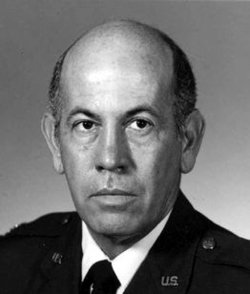
    Col. Robert Slane on his retirement at BAFB 1974.
    Memoir of Robert Slane

    Robert Slane

    1st cousin once removed

    1st cousin twice removed

    1st cousin 3 times removed

  • Edgar Clyde Roper

    January 25th, 2024

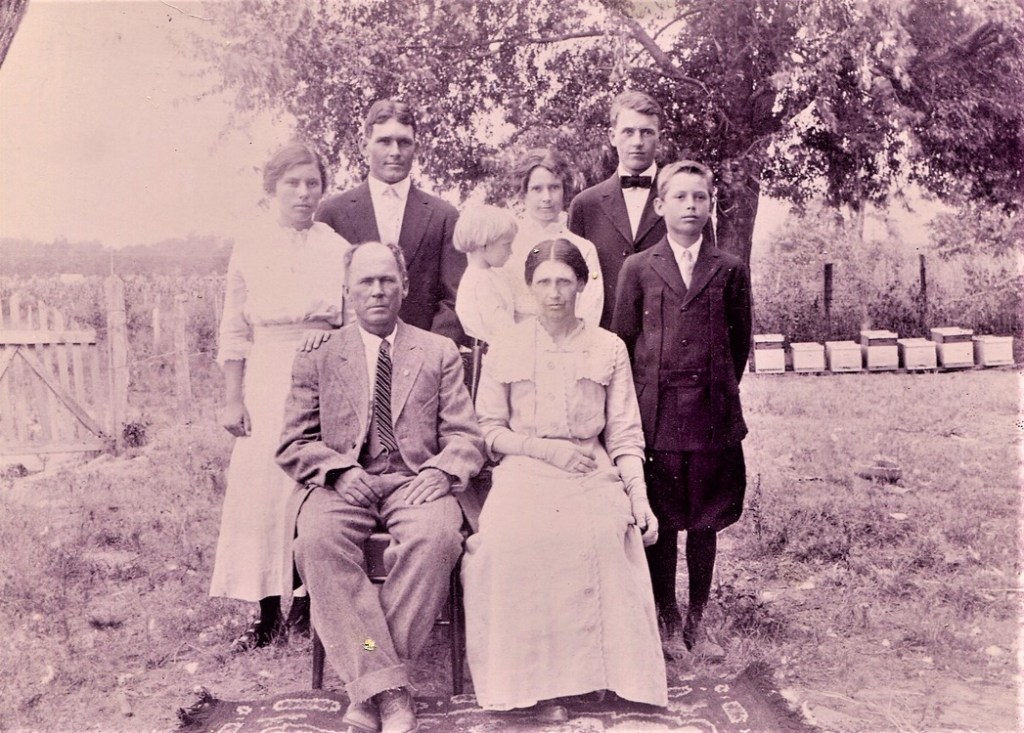
    Clyde (May 27, 1895-December 31, 1968) was born in Paragould, Arkansas to Benjamin and Elizabeth (Bettie) Marshall Roper. He was the third of five: Lillian Erna, Earl, Clyde, Myrtle, and Frank. We don’t have any pictures of him as a child. This is the earliest one:

    Seated in front: Benjamin Franklin Roper and Elizabeth (Bettie). Standing: Myrtle, Earl, Erna holding Elmond Draper, Clyde, Frank.

    He also lived in Oklahoma as a teenager. His older brother Earl lived in Trinidad, Colorado and worked for the railroad, and that may have been the reason Clyde moved to Trinidad as a young man.

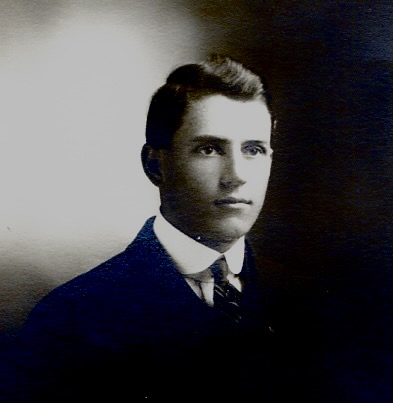
    Clyde in 1915

    He enlisted in the army in 1917 and was sent to Camp Custer, Michigan, and Leon Springs, Texas. He became a 2nd lieutenant, and was demobilized in 1918 because World War I ended. He was never sent overseas.

    Clyde and Mabel Lee married on January 1, 1922. They settled in Trinidad and had two children, Edgar and Joan.

    Edgar and Clyde, 1922

    He worked for Montgomery Ward for a time, then lost that job in the depression, and eventually got a job as a traveling salesman for Nebraska Salesbook Company. That job took the family to Council Bluffs, Lincoln, Houston, Denver and finally to Albuquerque in 1945.

    Clyde, Mabel and two friends (?), maybe after their wedding? 1922

    Clyde, Joan, Edgar, Mary Lee Benedict, Mabel, when they lived in Houston about 1936

    Clyde was outgoing and sociable, and he enjoyed his job as a travelling salesman. He had routes in southern New Mexico, southern Colorado and Arizona at different times, sometimes receiving Navajo rugs or pottery in trade for his paper products. He made a circuit through Hatch, Lordsburg, Deming, Silver City, Truth or Consequences, Alamagordo, etc. He and his daughter Joan often wrote back and forth while he was on the road.

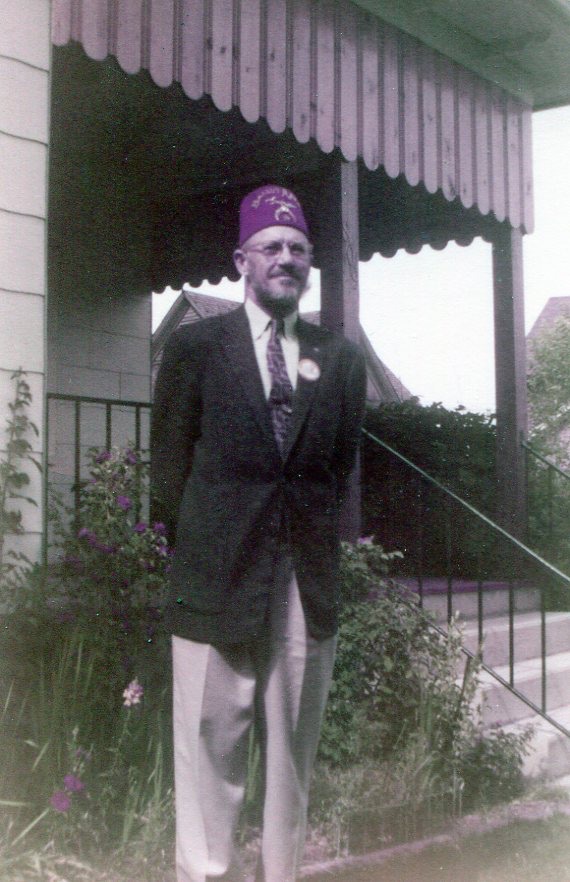
    He belonged to a lot of organizations – the Shriners, Masons, Elks, Scottish Rite, New Mexico Roadrunners (traveling salesmen organization), and more. He enjoyed the social aspect, and had many friends. He was active in his church and served as a deacon.

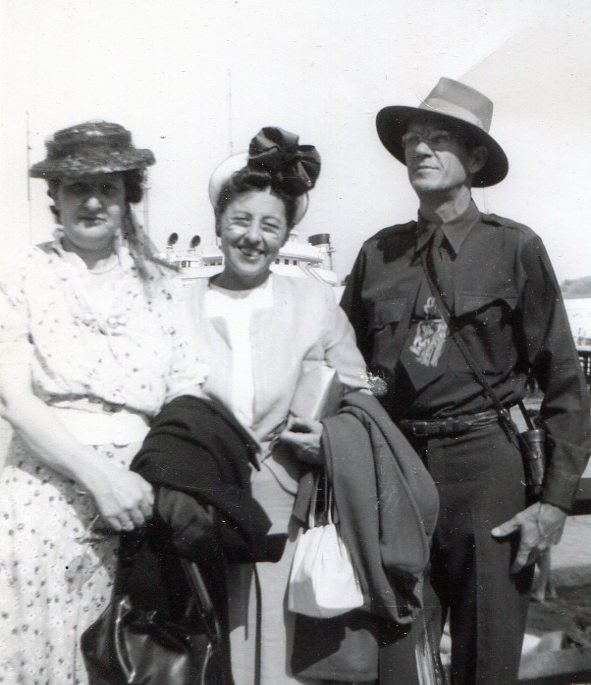
    Grace, Mabel, Clyde in California

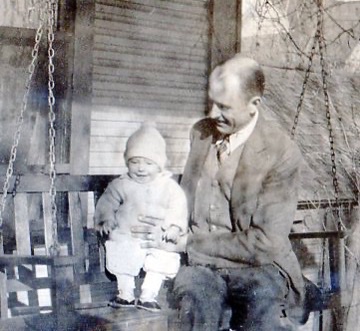
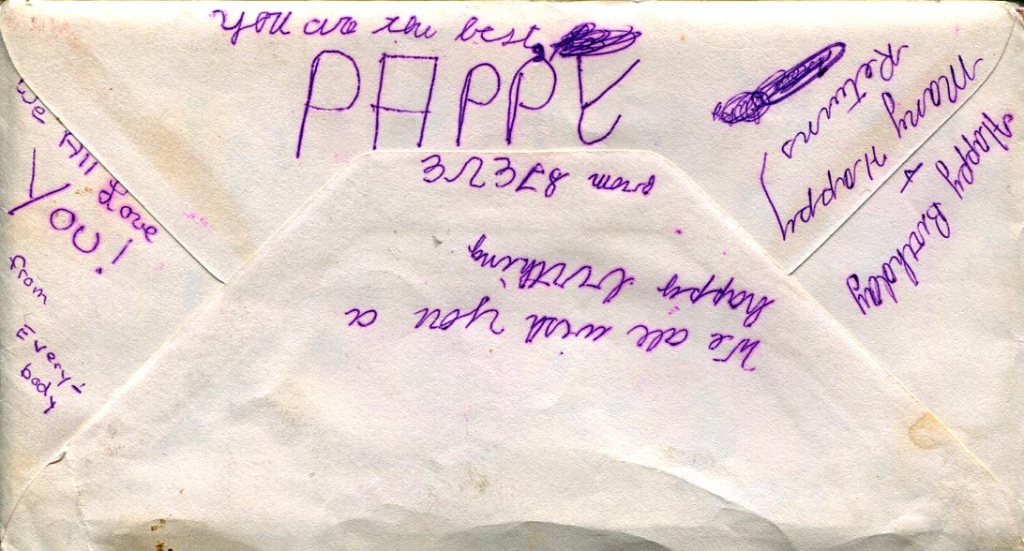
    He and Mabel had four grandchildren (Colleen, Suky, Buddy and Steve – they called him Pappy)

    Clyde, Colleen, Mabel, Steve about 1960

    Suky, Clyde, Colleen 1951

    Suky, Colleen, Clyde, Buddy 1953

    He let his grandkids rummage through his tools and nails to make woodworking projects and go through his office supplies for their drawings, which he hung above his desk. 

    An example of the products he sold, used as drawing tablets by the grandkids

    He would sometimes walk through the house with Charlie, the parakeet, perched on his bald head and taught Charlie to say “lousy bird”. There were always dogs, cats, rabbits, etc. around, and he might not say so, but seemed to be fond of them – Seymour the cat, for one. Baseball and boxing on the Gillette Cavalcade of Sports , as well as the show Rawhide were some of his favorite tv shows – he would make popcorn in their slightly dangerous looking popcorn popper for the grandkids. He liked Trappy’s hot peppers, and would replace the vinegar in the bottle when it ran out to spice up his food. Sometimes he would sunbathe on his chaise lounge in the backyard – he was very pale. He didn’t like anyone to say a bad word – he was offended if he heard the word stupid used in an argument. He would soothe babies with rocking them and singing “Bayou bayou bum bum bum” . You would hardly ever see him without his pipe – there was quite a ritual involved of tapping out the tobacco, adding some from his pouch, lighting it and puffing a few times to get it going. He was never unkind.

    A snippet from a letter he wrote to Edgar on New Year’s Day, 1968

    Clyde

    Grandfather

    Great grandfather

    Great great grandfather

  • Mabel Isabel Lee

    January 18th, 2024

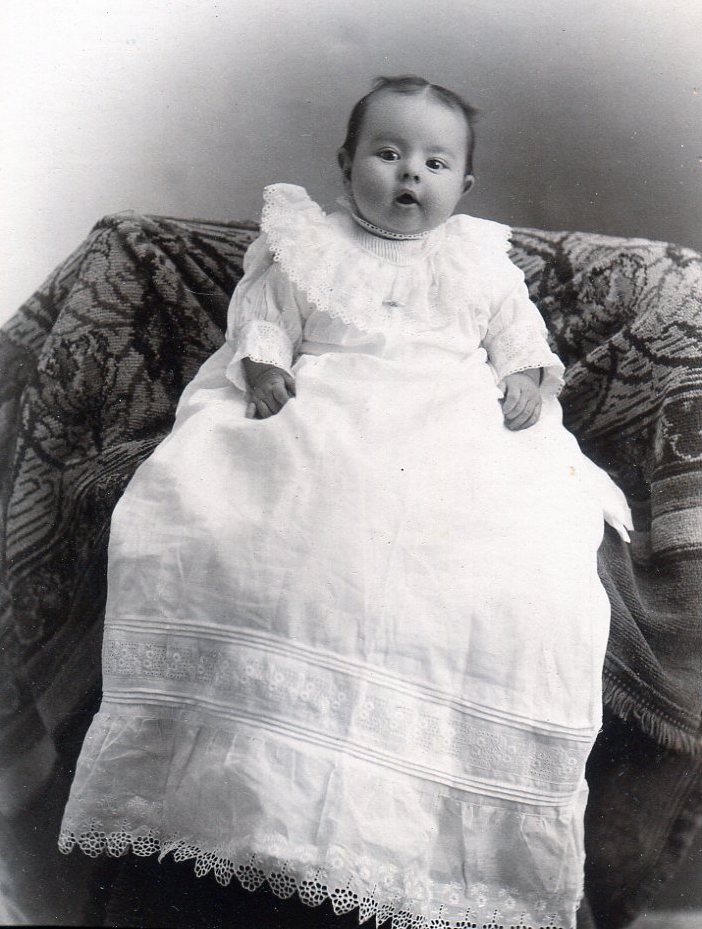
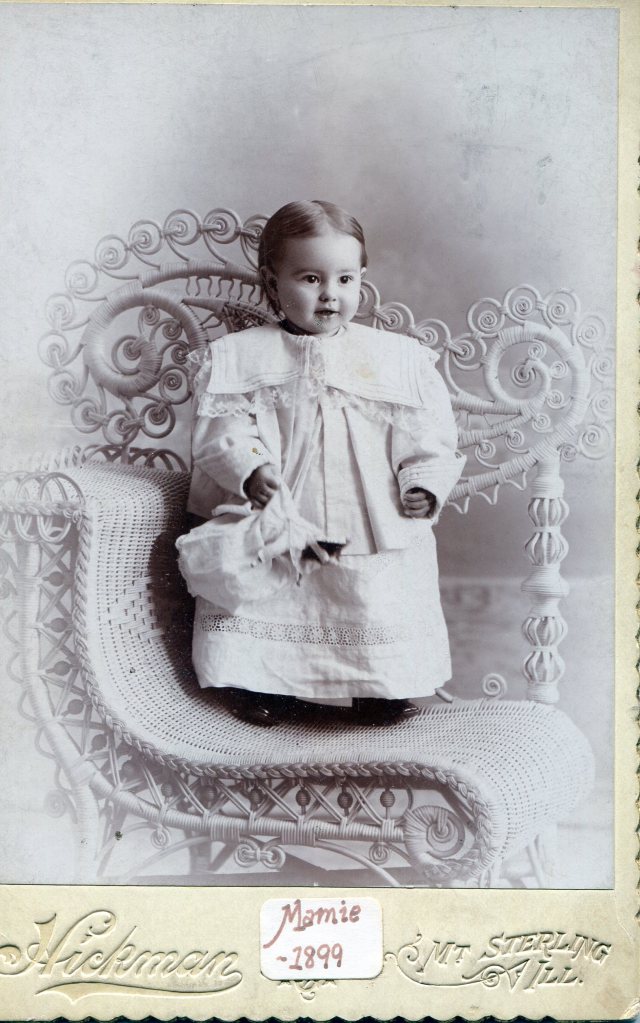
    Mabel (July 2-1896-May 30, 1989) was born in Maxwell, New Mexico, a tiny little town in northern New Mexico where her father was a telegraph operator for the railroad. (It might have been bigger back then judging from the county fair flyer below). Her parents were Henry and Minnie Lee, and she was the fifth child born to them. Three had previously died, (Mamie, Harry and Carl) and when she was born she had a big brother, Henry Claude, who died at the age of ten, when she was two. She was followed by Grace, Blanche, and Harlan. Minnie wrote her name as “Ruby Mabel Isabelle Lee” in her journal when Mabel was born, but it seems like Mabel may have dropped the Ruby. Pappy and Blanche always called her Mae, and the grandkids called her Mamie (she sometimes signed her letters to them “Mae-Mae”)

    Minnie’s journal entry

    Mabel in 1896

    Mabel in 1898

    Mabel, 1900

    They moved several times during her early childhood, to small towns near the railroad stations mostly in northern New Mexico and southern Colorado. It seems like it may have been a a hard life for them, in rather makeshift living conditions.

    Harlan, Blanche, Grace and Mabel Lee

    They travelled to Timewell, Illinois periodically to visit their grandparents, Newton and Barbara Lucas.

    Grace, Henry, Barbara (seated), Blanche, Minnie (seated), a friend, Mabel and Harlan

    When she was a teenager, they moved to Trinidad, Colorado and eventually moved to 809 Tillotson, where they lived from then on.

    Mabel, Grace and Blanche

    She married Clyde Roper (1895-1968) in 1924. It’s not clear why Clyde moved to Trinidad from Arkansas but may have been because his brother Earl lived there.

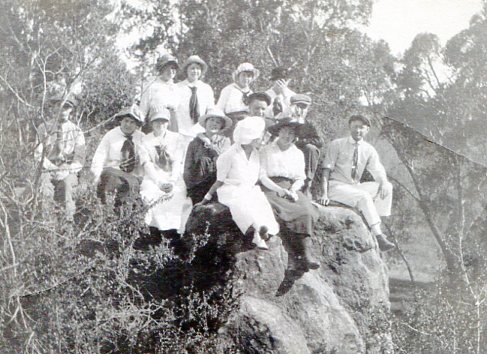
    Mabel is in the black hat in front, Clyde on the right, maybe?

    It seems like they had a big group of friends in Trinidad, and would go mountain climbing together to Fisher’s Peak and other nearby spots.

    Mabel is fourth from the right, and Clyde’s hand is on her shoulder. It’s possible this could be their wedding day. It seems like they may have had a small civil wedding.

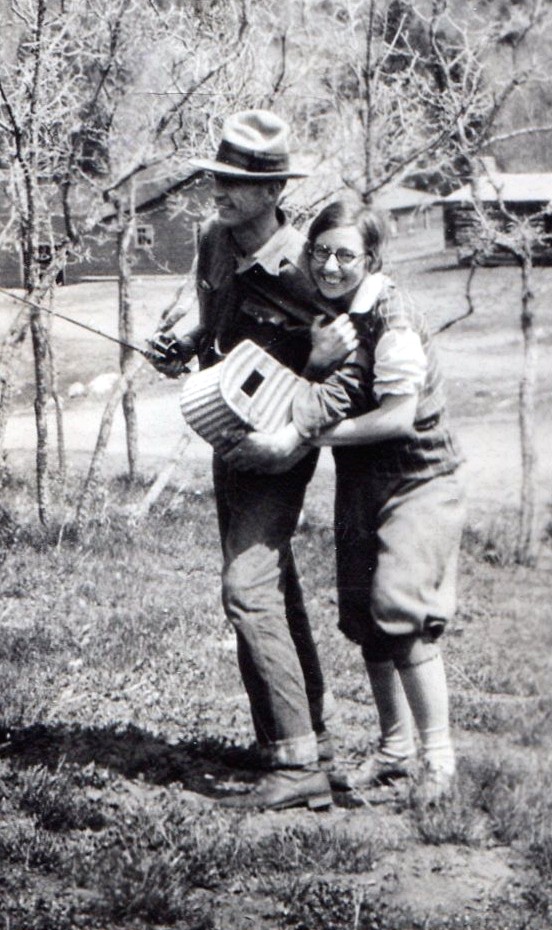
    Clyde and Mabel

    Mabel and Clyde lived in Trinidad for the early years of their marriage and had two children, Edgar (1925-2014) and Joan (1930-2022). Mabel worked as a court stenographer in Trinidad and she always was good at numbers, accounting and office work, and enjoyed working.

    When Clyde started working at Nebraska Salesbook Company, they moved to Council Bluffs, Lincoln, Denver, Houston, and then finally to Albuquerque. Mabel managed and kept the accounts for Clyde’s job. They joined Monte Vista Christian Church in Albuquerque and went there for years, where she was active in the Christian Women’s Fellowship, and did home visits to the elderly and homebound members, as well as some treasurer work for the church.

    Mabel and Clyde had four grandchildren, Colleen, Suky, Buddy and Steve. They took care of them a good amount of the time – entertained them, fed them, watched them, took them on trips , drove them to school, and provided a second home for them and all their pets and paraphernalia. Their lives may have been upended by the arrival of the grandchildren, but they didn’t seem to bat an eye, and gave them such security and love. Mabel was a wonderful cook – her fried chicken, pork chops, spaghetti with pork, artichokes, black eyed peas and rice, okra with tomatoes, chili, enchilada casserole – all delicious. She had two tv shows she didn’t like to miss – Concentration and Jeopardy - the kids would usually watch with her and guess along.

    Mabel and Blanchie at Monument Lake

    She and Clyde often travelled to Trinidad to see her sister Blanche, to California to visit Grace, and to Timewell to see Aunt Ruth, Sadie and Jessie. She and Blanchie were very close. She wrote great letters to Blanchie and to her son, Edgar. Here’s a funny snippet from one to Edgar about Roy:

    Roy, Blanche, Helen, Mabel, Clyde

    Mabel Lee Roper

    Grandmother

    Great grandmother

    Great great grandmother

  • Joseph Edward Browne, III (Buddy)

    January 11th, 2024

    Buddy ( May 9, 1952-January 2, 1970) was born in Albuquerque, New Mexico to parents Joan and Joe Browne, Jr. He was the third child, with big sisters Colleen and Suky and little brother Steve ( born in 1954).
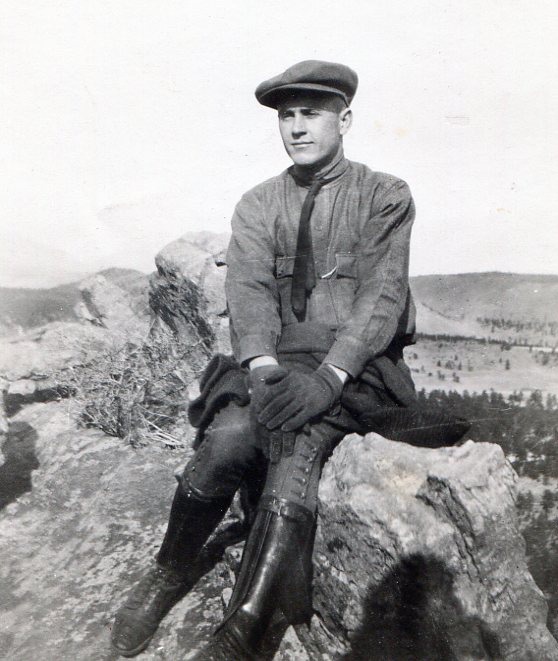
    Buddy, Suky, Buddy, Colleen 1954

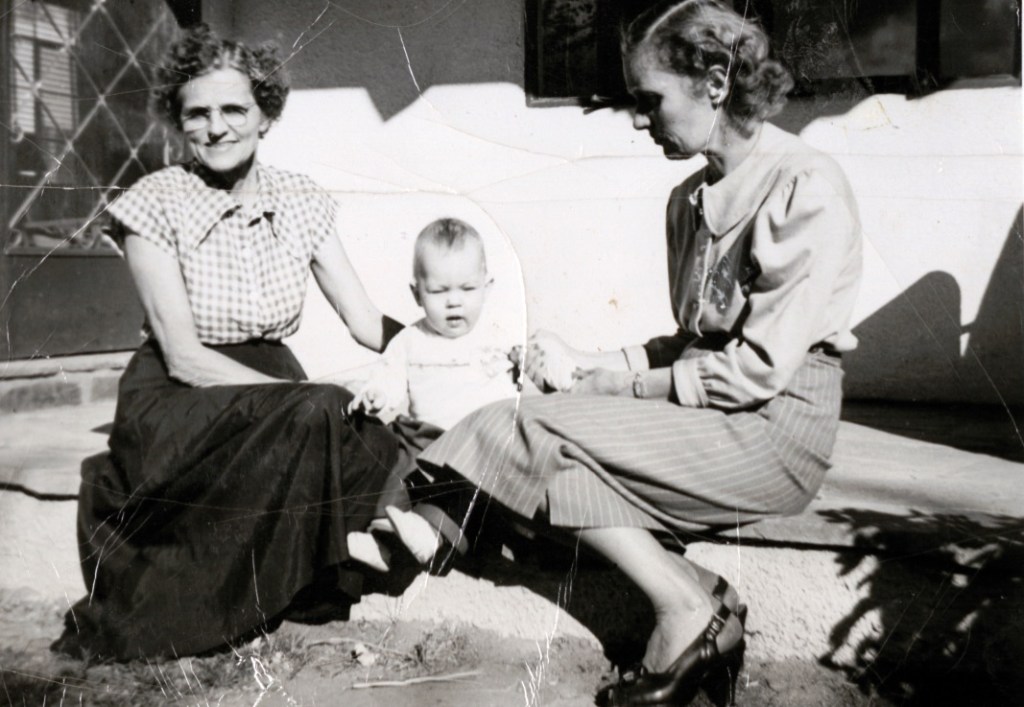
    Granny (Reba) holding Buddy, Colleen, Granny Bigham (Mary) holding Suky, Freddie Winter and Mary in Granny’s backyard

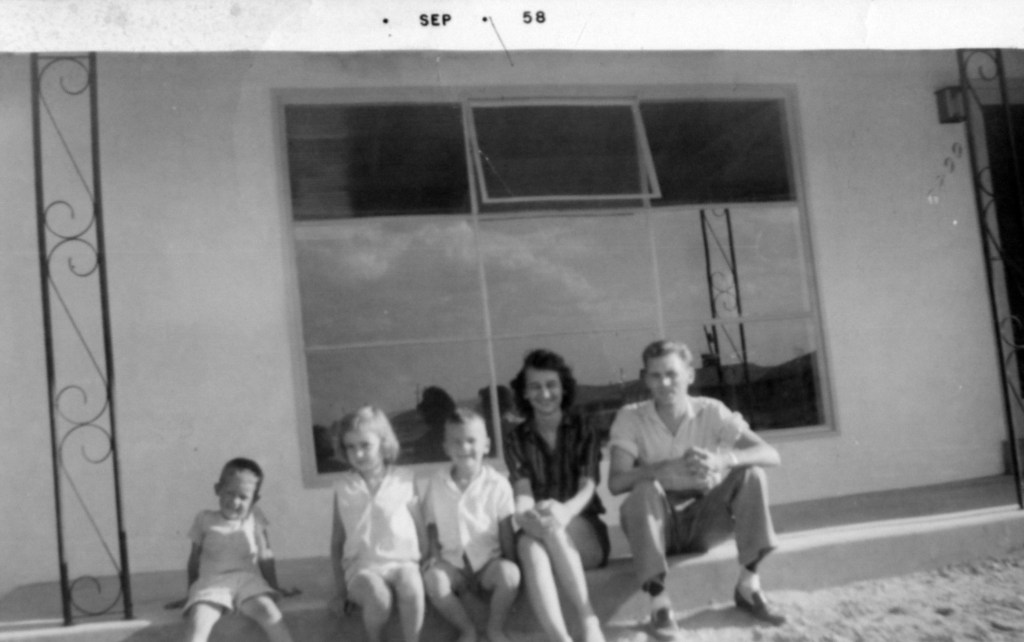
    Steve, Colleen, Buddy, Suky at Mamie and Pappy’s house in 1954

    Suky and Buddy above, Buddy around 1955

    Buddy, 1955

    Buddy and Steve around 1957

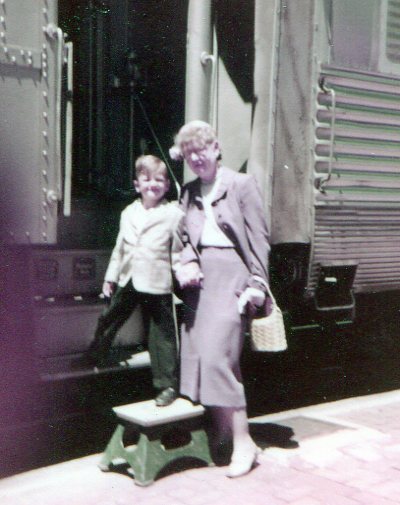
    Buddy around 1956 in Trinidad on the switch engine

    Buddy and Steve, 1958

    Buddy and Blanchie going on the train to Denver around 1959

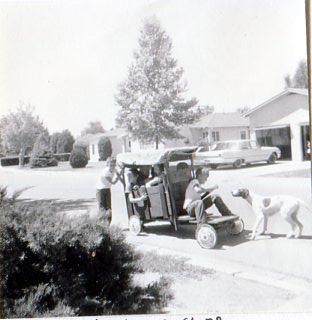
    Buddy’s car that he made. Some of the neighborhood kids are there – one of the Hurleys, Jeff Shaw and Scott Chambers, and Sally, the Shaw’s dog. Buddy’s driving in the bottom picture and Steve’s in the back seat.

    Much of the 1950s and early 60s for the Browne kids was spent at their grandparents’ house on Montclaire. (Clyde and Mabel Roper). Pappy let us use his tools for projects and Mamie didn’t object too much when we tore up the yard for miniature golf, forts and other projects. There were plenty of neighborhood kids (Shaws, Purtells, Hurleys, Ann Nichols, Cacciatores, Chambers, Nolans and Tommy Clark). Buddy usually had a project or was building a fort to play war.
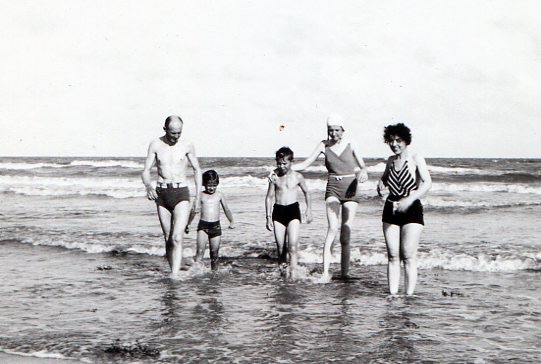
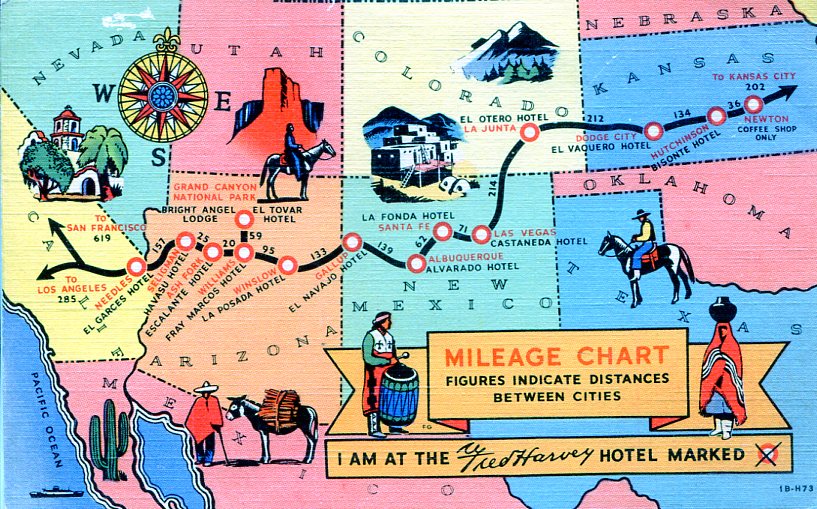
    Across the street in the above picture is the Loftin’s house – their cat Millie had kittens every year, and they left their garage door open for us to come and play with them.

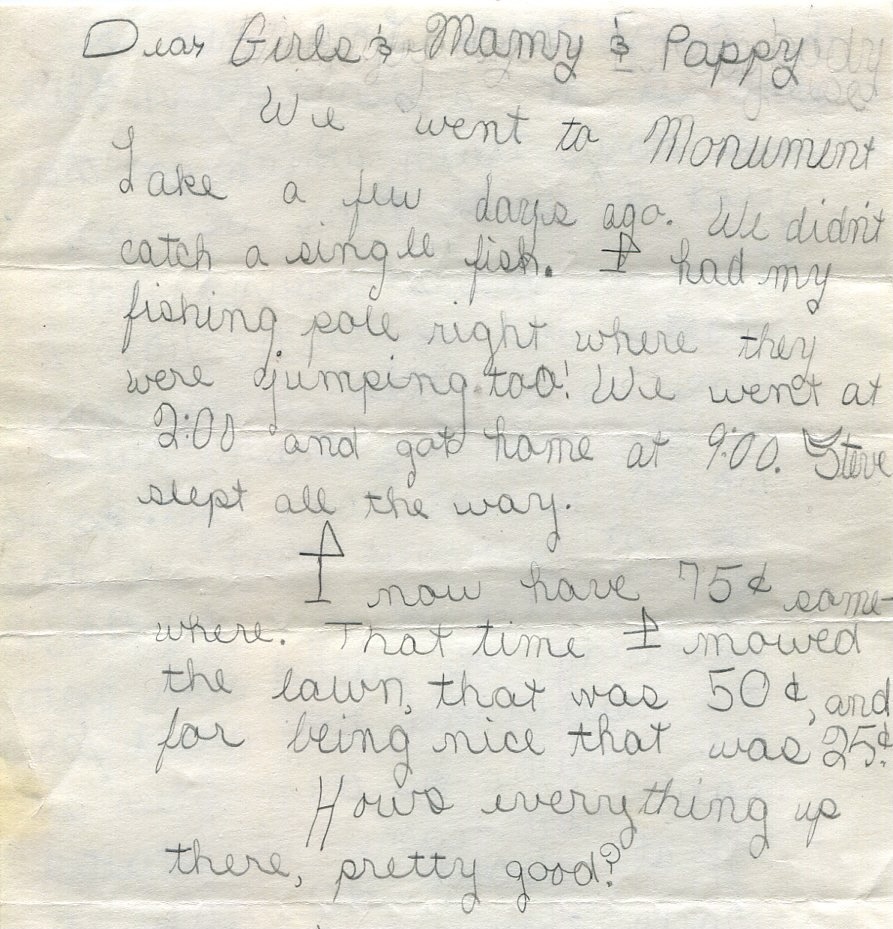
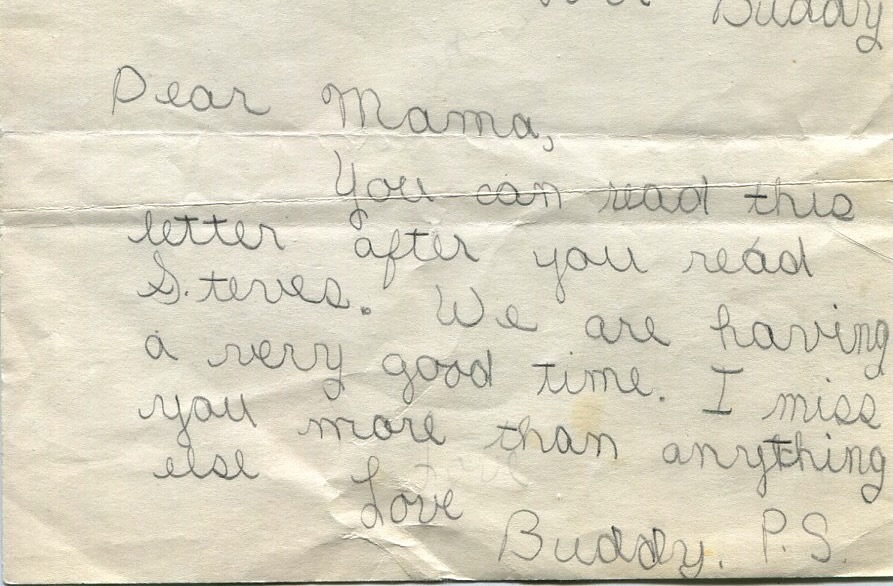
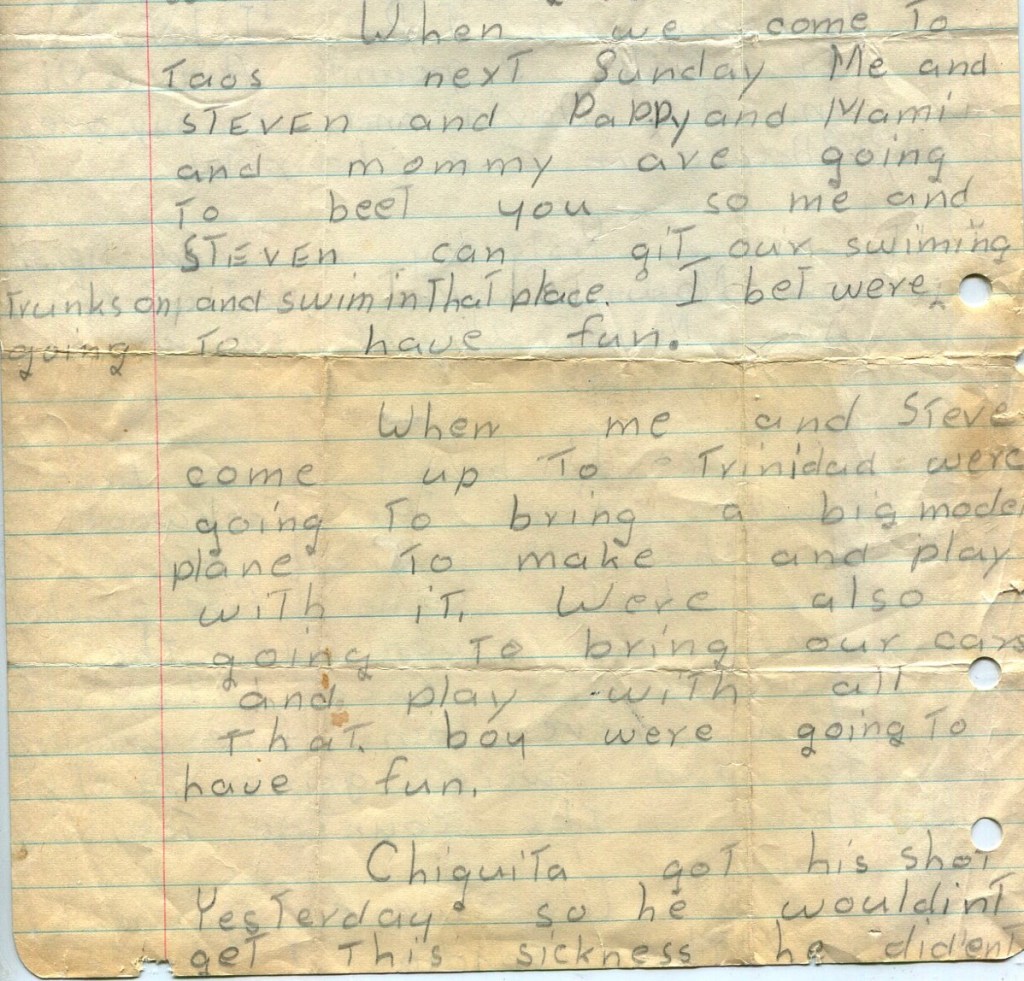
    Buddy liked to earn money and keep track of it by doing chores like mowing the lawn, raking apples, etc. The high point of summer was the trip to see Blanchie and Roy in Trinidad, Colorado. Here’s a couple of letters from Buddy in Trinidad, and one to the girls when they were in Trinidad.

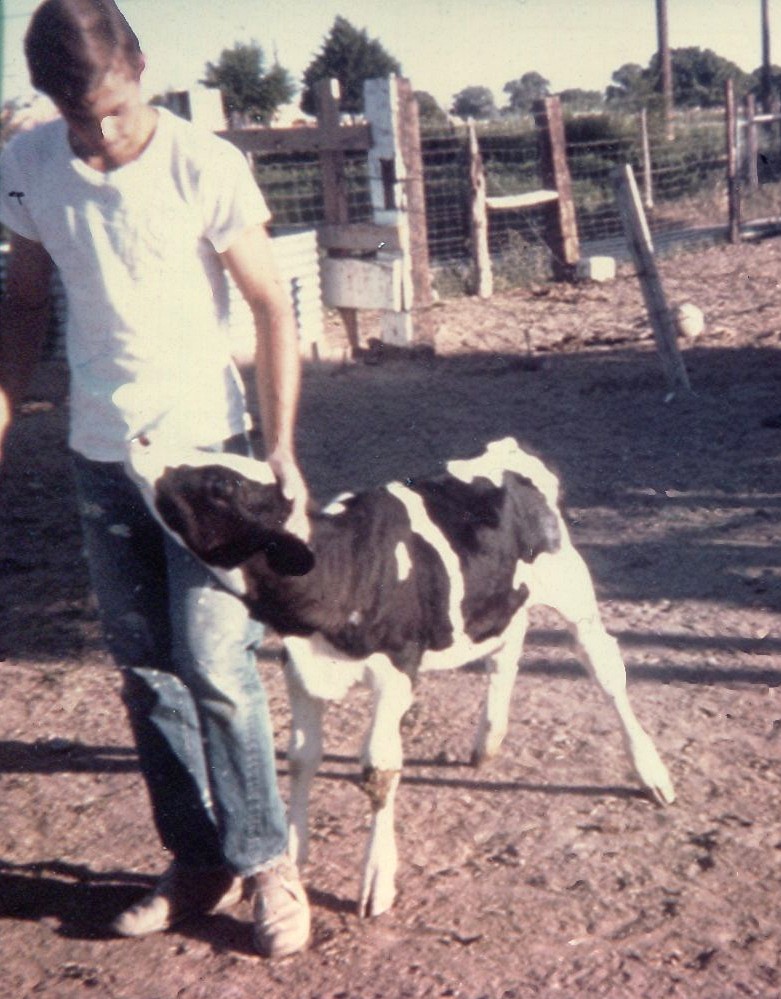
    In about 1966, the family moved to Peralta, NM. He worked at the Bosque Farm Dairy for a couple of years while in high school.

    Steve, Suky and Buddy on a fishing trip about1966

    Buddy in Peralta about 1967

    He went to stay with his dad, Joe Browne in Rockport, Texas for a time in 1968.

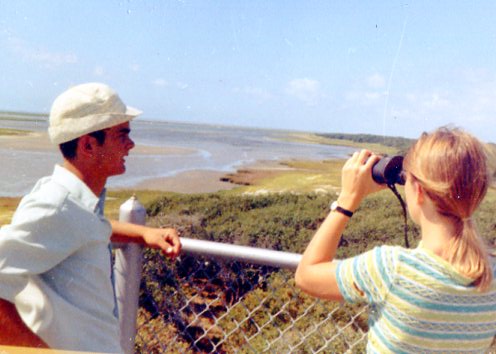
    Bill and Buddy on the barge in Rockport, above Buddy and Colleen at Aransas Pass Wildlife Refuge

    On January 2, 1970, Buddy died in a car accident. He was 17 1/2, a senior at Los Lunas High School. He was a son, a grandson and a brother, and for all of us it was a devastating loss.

    Buddy

    Brother

    Uncle

    Great uncle

←Previous Page
1 2 3 4 5
Next Page→

Blog at WordPress.com.


Loading Comments...
 

    • Subscribe Subscribed
      • Duke City Roots
      • Already have a WordPress.com account? Log in now.
      • Duke City Roots
      • Subscribe Subscribed
      • Sign up
      • Log in
      • Report this content
      • View site in Reader
      • Manage subscriptions
      • Collapse this bar