Royal Courtier, Scholar, Colonizer, Poet and Statesman
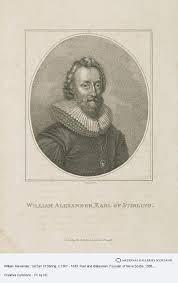
William Alexander (1567-September 12, 1640) was born in the manor house of Menstrie, Clackmannashire in Scotland.

His father (Alexander Alexander) died when he was young, and he was tutored by his great uncle, James Alexander, and educated at the Universities of Glasgow and Leiden . He was later chosen to be tutor to Archibald, 7th Earl of Argylle and accompanied him to France, Italy and Spain. On his return from these travels he was introduced to the court by the young Earl of Argylle.
In 1603, when the crowns of England and Scotland were united, he joined the court of James VI of Scotland when he assumed the throne as James I of England in London, succeeding Queen Elizabeth. There he became tutor to Prince Henry. “His gifts as a poet, his culture as a scholar, and his high intellectual endowments, strongly commended him to King James…over whose unstable and vacillating mind the able courtier exercised a unique and life-long ascendancy.” (The Clan Donald, v. 2. ch. 3. p. 63) He may have met with some disfavor in Scotland due to his ties to the English throne.
Shortly after his travels, he married the aristocratic Janet Erskine in 1601, and they had seven sons and three daughters.
He became known as a poet and assisted King James in “The Psalms of King David, translated by King James”, which may not have been favorably received, especially by the Presbyterian clergy for its secular language. He wrote his longest work “Dooms-day or the Great Day of the Lord’s Judgment,” a biblical epic from the Creation to the book of Revelations, and was known for his sonnets and tragedies. He was knighted in 1609. Prince Henry died at the age of eighteen in 1612, and Sir William’s poem on his life tragically cut short was appreciated by King James who then appointed him as tutor to Prince Charles.
The King appointed him as “The Master of Requests” in 1614- a post that commissioned him to “discharge all manner of persons from resorting out of Scotland to this our kingdome, unlease it be gentlemen of good character…” (Dictionary of National Biography. v. 1-22. p. 278) Apparently it was meant to ward off the onslaught of requests from needy Scots.
In 1621 he received the highest honor of his career – the grant of Nova Scotia, and practically all of Canada. The king wanted to populate these provinces with loyal British subjects as they had done with Ulster, and so created a plan in which Sir William would divide the land into parcels and sell them with a baronet title attached. Unfortunately some of the land in this grant was already claimed and occupied by France.
The charter was enlarged after King Charles came to the throne and gave William the authority to “erect cities, appoint fairs, hold court, grant lands and coin money.” (Dictionary of National Biography, v. 1-22. p. 279) He was almost a king himself to this new world. His efforts at colonization though were not very successful. “William showed high-hearted courage in his efforts to colonise but the difficulties were enourmous, and the opponents (including France) formidable, but the good knight never knew when he was beaten, He and his son made effort after effort. ” (Dictionary of National Biography. v 1-22, p. 279)
He may be that his nature did not excel in practical matters – he seemed to be more of an idealist and dreamer, with an “impulsive Celtic spirit and visionary poetic nature who saw things through a golden halo, in which difficulties vanished and triumph was assured.” (The Clan Donald, v. 2. ch. 3, The Earls of Stirling p. 67)
Eventually the French prevailed and Sir William lost much of the land – he was promised recompense for his losses, but never received payment. He was never able to get many colonists to settle there either. The difficulties of the long voyage, lack of communication, lack of infrastructure, and involvement of France made the chances for success low.
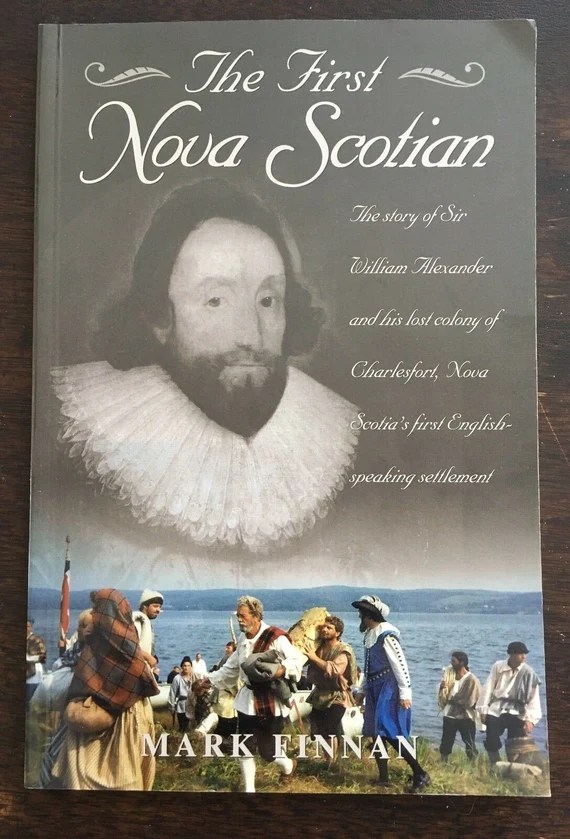
in 1626 he was appointed secretary of state for Scotland, which he held to his death. “With consummate ability, and single-eyed patriotism and long patience he ruled Scotland for the king. …he had a cool head, a sound judgment , a generous heart and a firm hand.” (The Clan Donald, v. 2, ch. 3. The Earls of Stirling)
In 1626 he bought and remodeled his house in Stirling, known as Argyll House, and when Charles I ascended to the throne in was given the title Earl of Stirling, with the additional title Viscount of Canada.

He died in 1640 in London, plagued with debt, his Nova Scotia project a failure. The town of Stirling reclaimed his house, in lieu of his unpaid debts. The title of Earl lapsed in 1739 on the death of the fifth earl.
Sir William Alexander
12th, 13th, 14th great grandfather
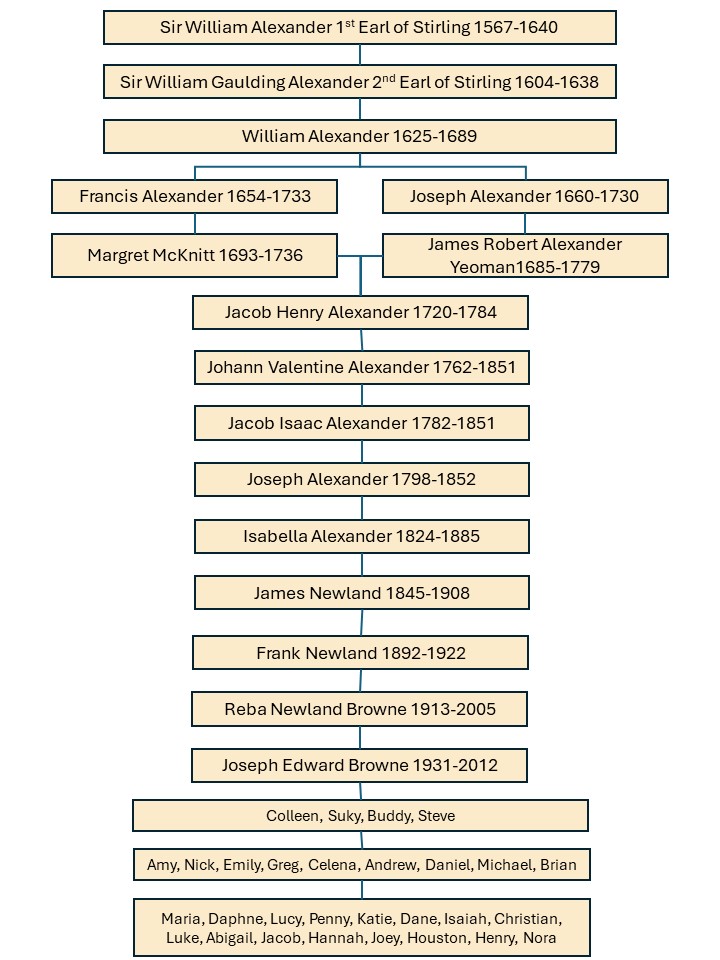
 Duke City Roots